Origami
Insects
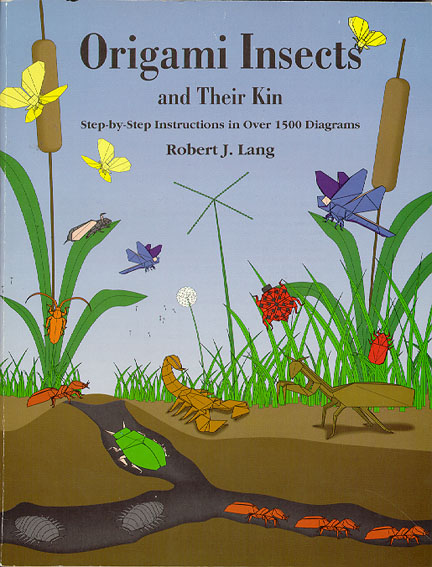
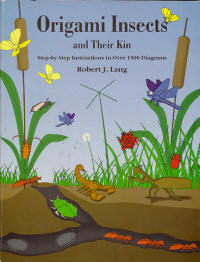 Welcome to the Origami Insects page! Here you will see showcased some of
the models from Robert Lang's wonderful and complex book, Origami
Insects and Their Kin (ISBN
0486286029). Models from 12-inch or 15-inch squares; don't try anything
smaller! Each takes over an hour to fold, and some can take as long as
four or five hours to create. The models in this book are extremely
difficult, even for an advanced paperfolder. I would recommend this book
only if you are ready for a very difficult origami challenge! Welcome to the Origami Insects page! Here you will see showcased some of
the models from Robert Lang's wonderful and complex book, Origami
Insects and Their Kin (ISBN
0486286029). Models from 12-inch or 15-inch squares; don't try anything
smaller! Each takes over an hour to fold, and some can take as long as
four or five hours to create. The models in this book are extremely
difficult, even for an advanced paperfolder. I would recommend this book
only if you are ready for a very difficult origami challenge!
All
images are ©Eric Andersen
 |
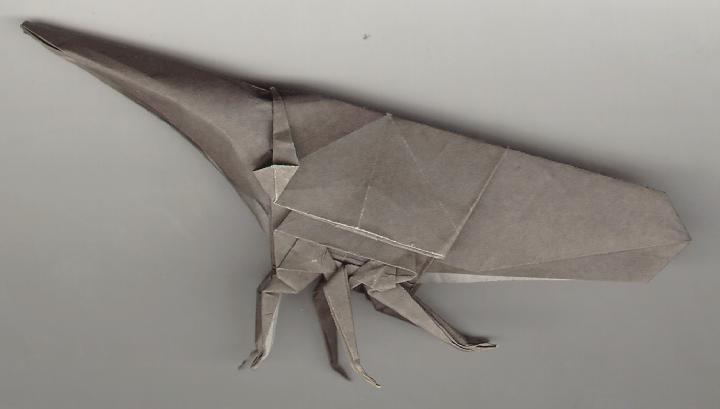
The treehopper hides
from predators by mimicking a thorn.(16K) |
|
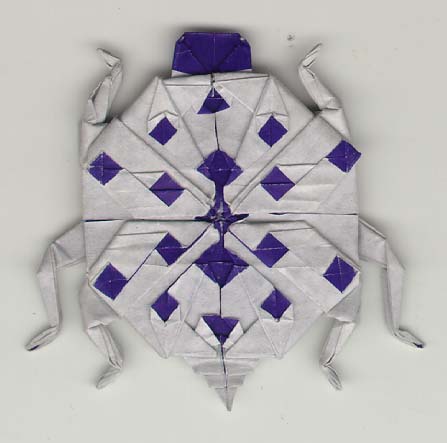
The spotted
ladybug is
recognizable by its distinctive spotted
pattern and feeds chiefly on aphids and
other small insects. (21K) |
 |
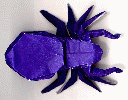 |
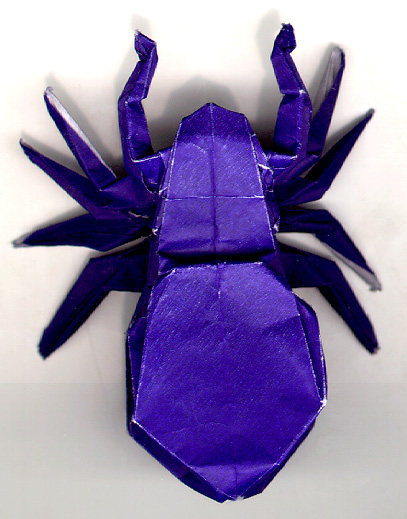
Often thought to be dangerous, the bite of
the tarantula is
painful but not highly venomous.(92K) |
|
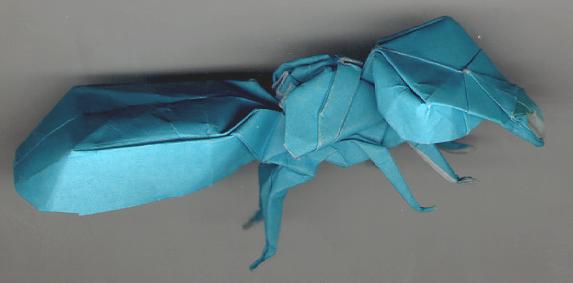
The ant is
well-known for its segmented body, its
social organization, and its ability to walk
in on your picnic. (12K) |
 |
 |
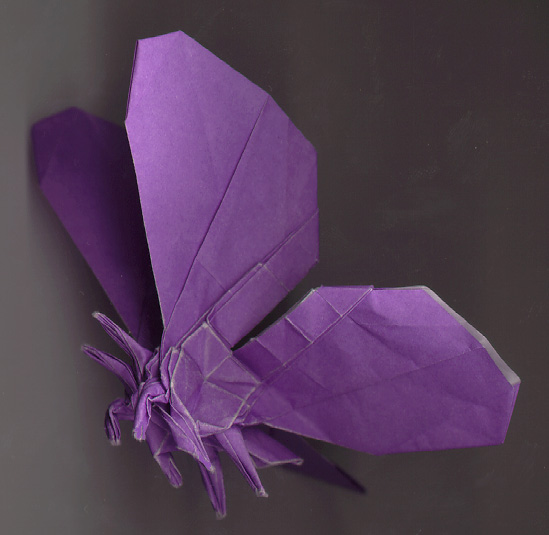
The butterfly is
characterized by its clubbed antennae,
slender body, and large, broad, often
conspicuously marked wings. (65K) |
|
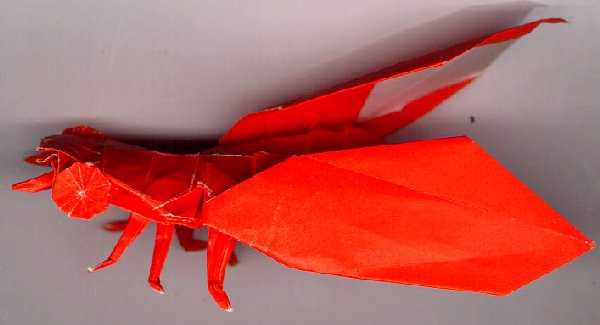
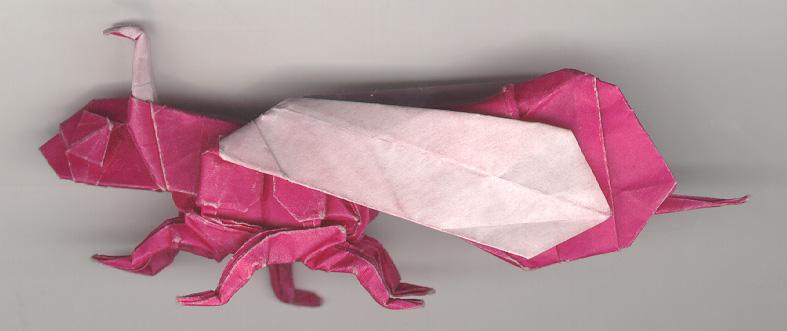
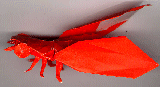
The male cicada produces
a shrill sound by means of vibrating
membranes on the underside of the abdomen. (27K) |
 |
 |
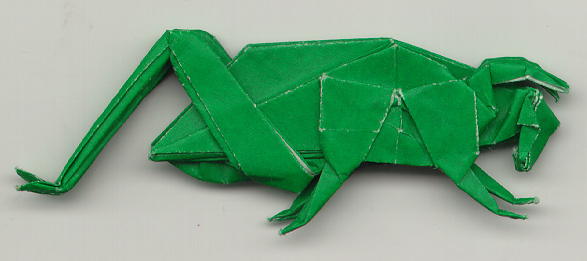
One of the most recognizable insects, the grasshopper has
powerful long legs adapted for leaping. Some
species are highly destructive to
vegetation. (52K) |
|
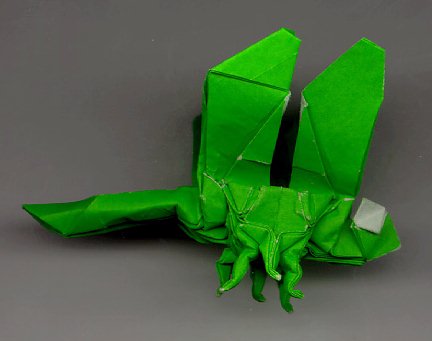
Dragonflies have
long, slender bodies and wings and large
compound eyes. They prey on other insects. (18K) |
 |
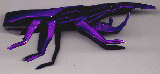 |
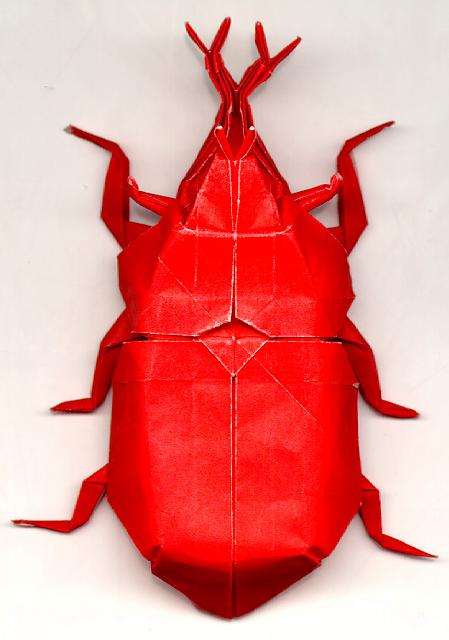
The Hercules
beetle is
one of several large horned beetles found in
Central and South America. (23K) |
|
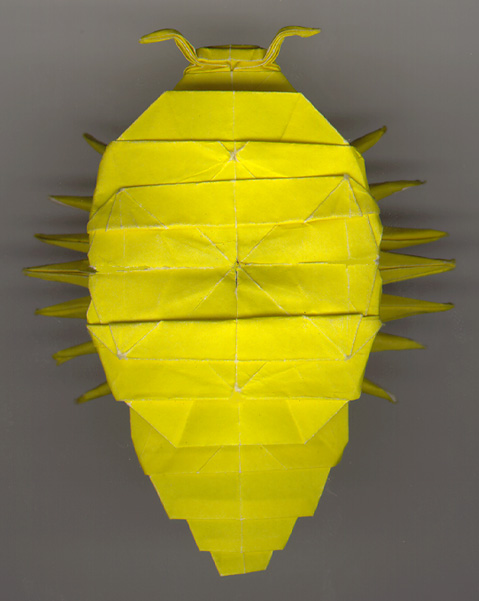
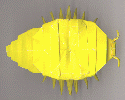
The pillbug lives
under rocks and logs and feeds on rotting
matter. It can roll itself into a
pill-shaped ball. The pillbug is not an
insect, and it is one of the only
terrestrial crustaceans.*(69K) |
 |
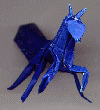 |
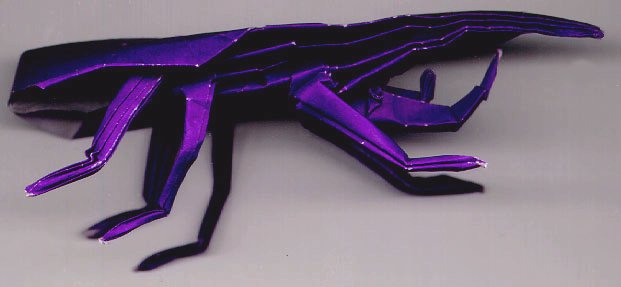
The Praying
mantis is
a predaceous insect whose strong forelegs
are used to snatch their prey from an
ambush. (43K) |
|
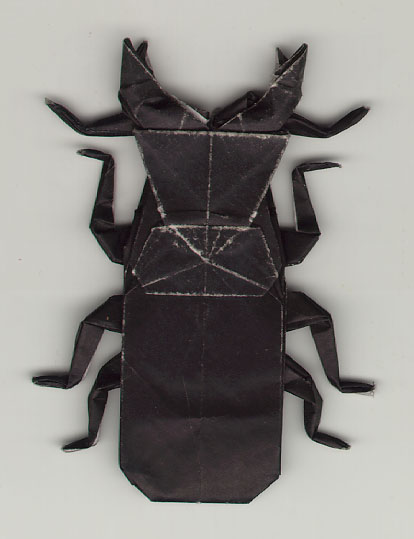
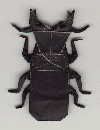
The stag
beetle gets
its name from the fact that some males have
jaws resembling the antlers of a deer. (30K) |
 |
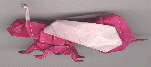 |
Paper wasps make
their own paper by chewing wood into pulp
and mixing it with their saliva. (22K) |
|
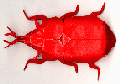
The samurai
helmet beetle is
one of the most common and famous insects in
Japan, often kept as pets by children. (30K) |
 |
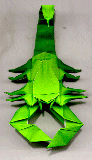 |
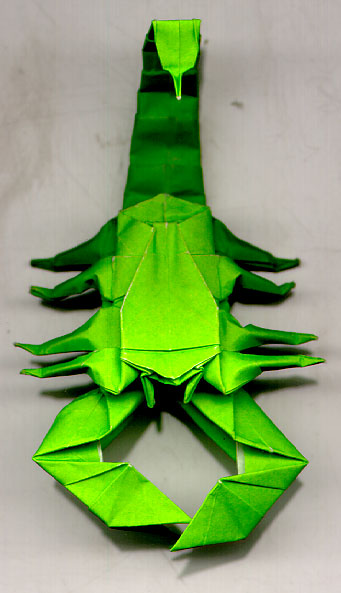
Not an insect, the scorpion is
closely related to spiders and has a painful
but not dangerous sting. However, there are
quite a few that are very deadly to humans.
In fact, the larger, more ferocious looking
scorpions are harmless while the smaller,
less formidable varieties are highly
venomous. *(45K) |
|
|